




































Skip to main content Skip to main navigation menu Skip to site footer
Research in Psychotherapy: Psychopathology, Process and Outcome

Editor-in-Chief: Mariagrazia Di Giuseppe | Scientific Director: Vittorio Lingiardi | eISSN 2239-8031 - pISSN 2499-7552

  • About the Journal
  • Editorial Board
  • Publication Ethics
  • Current issue
  • Archives
  • Online Advance
  • Special Issues
    • Overview
    • Forthcoming Special Issues
  • Copyright
  • Register
  • Login
  • Search
  • Contacts
  • News
2.3
Impact Factor 2024
4.3
CiteScore 2024
2.3
Impact Factor 2024
4.3
CiteScore 2024
Submit
an article
  1. Home /
  2. Search

Search

Advanced filters
Published After
Published Before

Search Results

##search.searchResults.foundPlural##
  • A pilot study of the Italian adaptation of the Session Evaluation Questionnaire fourth version

    Diego Rocco, Silvia Salcuni, Elena Antonelli
    2017-07-06
    https://doi.org/10.4081/ripppo.2017.269
    2342
    PDF: 1102
    HTML: 133
  • Repairing alliance ruptures in psychotherapy with adults: a scoping review

    Alberto López-Vásquez, Nicolás González-Araneda, Stephanie Vaccarezza, Catherine F. Eubanks, Paula Errázuriz
    2026-04-30
    https://doi.org/10.4081/ripppo.2026.892
    34
    PDF: 54
    SUPPLEMENTARY MATERIAL: 1
  • Revisiting defense mechanisms in contemporary clinical practice: evidence and perspectives

    Vittorio Lingiardi, Fabio Madeddu
    2025-12-22
    https://doi.org/10.4081/ripppo.2025.877
    1169
    PDF: 722
    HTML: 97
  • Transference interpretation and psychotherapy outcome: a systematic review of a no-consensus relationship

    Meltem Yilmaz, Kutlu Kağan Türkarslan, Ludovica Zanini, Dilara Hasdemir, Grazia Fernanda Spitoni, Vittorio Lingiardi
    2024-05-02
    https://doi.org/10.4081/ripppo.2024.744
    3912
    PDF: 1391
    SUPPLEMENTARY MATERIAL: 158
    HTML: 76
  • Problematic internet use in emerging adulthood to escape from maternal helicopter parenting: defensive functioning as a mediating mechanism

    Nicola Carone, Ilaria Maria Antonietta Benzi, Laura Muzi, Laura Antonia Lucia Parolin, Andrea Fontana
    2023-11-08
    https://doi.org/10.4081/ripppo.2023.693
    2506
    PDF: 1003
    HTML: 105
  • Dreaming during the COVID-19 lockdown: a comparison of Italian adolescents and adults

    Massimiliano Sommantico, Ilaria Iorio, Marina Lacatena, Santa Parrello
    2021-08-12
    https://doi.org/10.4081/ripppo.2021.536
    5309
    PDF: 652
    HTML: 85
  • Interpersonal emotion regulation questionnaire: psychometric properties of the Italian version and associations with psychopathology

    Irene Messina, Pietro Spataro, Alessandro Grecucci, Danielle M. Moskow, Cristina Marogna, Stefan G. Hofmann
    2022-08-24
    https://doi.org/10.4081/ripppo.2022.616
    4267
    PDF: 2491
    Appendix: 533
    HTML: 483
  • DBT-informed treatment in a partial hospital and intensive outpatient program: the role of step-down care

    Kirk D. Mochrie, John Lothes II, Eric Guendner, Jane St. John
    2020-09-07
    https://doi.org/10.4081/ripppo.2020.461
    2504
    PDF: 1094
    HTML: 92
  • Psychodiagnostic Chart-Child (PDC-C): a valid and clinically sensitive diagnostic tool for patient-tailored intervention planning

    Alexandro Fortunato, Annalisa Tanzilli, Vittorio Lingiardi, Anna Maria Speranza
    2022-03-01
    https://doi.org/10.4081/ripppo.2022.591
    4603
    PDF: 1268
    HTML: 45
  • Effectiveness is the gold standard of clinical research

    Francesco Gazzillo, Adriano Schimmenti, Ivan Formica, Alessandra Simonelli, Sergio Salvatore
    2017-07-13
    https://doi.org/10.4081/ripppo.2017.278
    2491
    PDF: 1302
    HTML: 642
  • Crying in psychotherapy: an exploratory mixed-methods study on forms of emotional crying and associated therapeutic interventions

    Fabienne Gutjahr, Cord Benecke
    2024-04-17
    https://doi.org/10.4081/ripppo.2024.725
    1762
    PDF: 1007
    HTML: 48
  • Self-assessment of patterns of subjective experience: development and psychometric study of the States of Mind Questionnaire

    Bruno Faustino, António Branco Vasco, Giancarlo Dimaggio, Ana Nunes da Silva; Sophie Seromenho
    2021-01-20
    https://doi.org/10.4081/ripppo.2020.465
    2033
    PDF: 822
    HTML: 23
  • Trans in treatment: a mixed-method systematic review on the psychotherapeutic experiences of transgender and gender diverse people Transgender people’s experiences of psychotherapy

    Selene Mezzalira, Nicola Carone, Vincenzo Bochicchio, Sofia Villani, Gianluca Cruciani, Maria Quintigliano, Cristiano Scandurra
    2025-02-28
    https://doi.org/10.4081/ripppo.2025.834
    4113
    PDF: 1707
    SUPPLEMENTARY MATERIAL: 796
    HTML: 36
  • Advancement in the child attachment interview and the child and adolescent reflective functioning scale using a PDM-2 framework: case reports

    Fabiola Bizzi, Francesca Locati, Laura Parolin, Shmueli Goetz Yael, Emanuela Brusadelli
    2022-03-04
    https://doi.org/10.4081/ripppo.2022.586
    5117
    PDF: 1134
    HTML: 33
  • Models of practice and training in psychotherapy: cross-national perspectives from Italy and Canada

    Victoria Klimkowski, Sofia McRae, Alexia Blick, Laurence Beaulieu, J. Reese S. Handley, Anara A. Hopley, Caroline A. Hyde, Devika M. Jain, Sylvia Kolodziejczyk, Josiane Laliberté, Alexa Lévesque, Lara M. Masri, Anya M. Monet, Reagan S. Nediu, Rachel Valihrach, Giorgio Tasca
    2024-03-14
    https://doi.org/10.4081/ripppo.2024.732
    2257
    PDF: 810
    Supplementary Material: 260
    HTML: 50
  • Italia Ti Ascolto [Italy, I am listening]: an app-based group psychological intervention during the COVID-19 pandemic

    Laura Antonia Lucia Parolin, Ilaria Maria Antonietta Benzi, Erika Fanti, Alberto Milesi, Pietro Cipresso, Emanuele Preti
    2021-03-29
    https://doi.org/10.4081/ripppo.2021.517
    10359
    PDF: 1027
    HTML: 40
  • “Trust me, do not trust anyone”: how epistemic mistrust and credulity are associated with conspiracy mentality

    Felix Brauner, Peter Fonagy, Chloe Campbell, Julia Griem, Timo Storck, Tobias Nolte
    2023-12-28
    https://doi.org/10.4081/ripppo.2023.705
    4036
    PDF: 1405
    HTML: 226
  • Personal Projects Analysis as an idiographic approach in psychotherapy: an exploratory study

    Margarida Pedroso de Lima, Isabel Albuquerque, Paulo Jorge Martins, António-José Gonzalez
    2023-05-08
    https://doi.org/10.4081/ripppo.2023.668
    1784
    PDF: 517
    HTML: 27
  • Assessing children’s defense mechanisms with the Defense Mechanisms Rating Scales Q-sort for Children

    Mariagrazia Di Giuseppe, Tracy A. Prout, Lauren Ammar, Thomas Kui, Ciro Conversano
    2021-12-21
    https://doi.org/10.4081/ripppo.2021.590
    4001
    PDF: 1525
    HTML: 813
  • Esoteric power, useless, useful: considerations about dreams in cognitive-behavioural therapy

    Antonino Carcione, Marta Santonastaso, Francesca Sferruzza, Ilaria Riccardi
    2021-08-30
    https://doi.org/10.4081/ripppo.2021.543
    3336
    PDF: 1164
    HTML: 131
  • Effect of defense mechanisms on the longitudinal development of interpersonal problems during outpatient therapy

    Jonas Schmitt, Matthias Volz, Cord Benecke
    2025-12-31
    https://doi.org/10.4081/ripppo.2025.878
    903
    PDF: 372
    SUPPLEMENTARY MATERIAL: 163
    HTML: 67
  • Transference-focused psychotherapy in an inpatient setting for borderline personality disorders: changes in symptomatology

    Torvi Abel, Moritz Happel, Franca Daerr, Carsten Spitzer, Cord Benecke, Birger Dulz
    2025-01-28
    https://doi.org/10.4081/ripppo.2025.810
    5121
    PDF: 1646
    HTML: 24
  • The transition to online psychotherapy during the pandemic: a qualitative study on patients’ perspectives

    Cecilia Giordano, Ivan Ambrosiano , Maria Teresa Graffeo, Alessandro Di Caro, Salvatore Gullo
    2022-11-04
    https://doi.org/10.4081/ripppo.2022.638
    5171
    PDF: 1783
    HTML: 50
  • Online Supportive Group as social intervention to face COVID lockdown. A qualitative study on psychotherapists, psychology trainees and students, and community people

    Emanuela Brusadelli, Laura Ferrari, Michele Benetti, Stefania Bruzzese, Giada Maria Tonelli, Salvatore Gullo
    2021-01-20
    https://doi.org/10.4081/ripppo.2020.501
    2478
    PDF: 1148
    HTML: 31
  • The psychological impact of COVID-19 on people suffering from dysfunctional eating behaviours: a linguistic analysis of the contents shared in an online community during the lockdown

    Gaia Albano, Rubinia Celeste Bonfanti, Salvatore Gullo, Laura Salerno, Gianluca Lo Coco
    2021-12-20
    https://doi.org/10.4081/ripppo.2021.557
    2663
    PDF: 877
    Appendix: 188
    HTML: 37
  • From turn-by-turn to larger chunks of talk: An exploratory study in psychotherapeutic micro-processes using conversation analysis

    Michael B. Buchholz, Horst Kächele
    2017-10-27
    https://doi.org/10.4081/ripppo.2017.257
    2351
    PDF: 1186
    HTML: 448
  • The relationship among attachment styles, interpersonal needs, and suicidal ideation in patients with psychiatric disorders

    Salvatore Sarubbi, Elena Rogante, Denise Erbuto, Monica Migliorati, Isabella Berardelli, Marco Innamorati, Maurizio Pompili
    2024-12-30
    https://doi.org/10.4081/ripppo.2024.785
    2818
    PDF: 482
    HTML: 14
  • Saving a seat at the table for community members: co-creating an attachment-based intervention for low-income Latinx parent-youth dyads using a promotor/a model

    Jessica L. Borelli, Lyric N. Russo, Jose Arreola, Breana R. Cervantes, Christina M. Marquez, Gloria Montiel, Vanessa Avalos, Jacqueline Carballo, Jackie Garcia, Isha Bhatt, Gina Torres, Francisca Leal, Nancy Guerra
    2022-02-04
    https://doi.org/10.4081/ripppo.2022.598
    4212
    PDF: 1092
    Appendix: 309
    HTML: 49
  • It takes two to tango: a qualitative meta-synthesis on processes of psychotherapy dropout from the Single Case Archive

    Liza Notaerts, Melissa De Smet, Martin Finn, Kimberly Van Nieuwenhove, Vicky Hennissen, Reitske Meganck
    2025-12-03
    https://doi.org/10.4081/ripppo.2025.876
    744
    PDF: 549
    HTML: 61
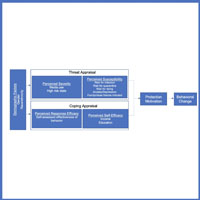
  • Age differences in the relationship between threatening and coping mechanisms and preventive behaviors in the time of COVID-19 in the United States: Protection Motivation Theory

    Jung Ki Kim, Eileen M. Crimmins
    2021-01-14
    https://doi.org/10.4081/ripppo.2020.485
    7283
    PDF: 1332
    HTML: 40
  • The relationship between overall defensive functioning and the Personality Assessment Inventory borderline and treatment outcome scales

    Laura A. Richardson, John H. Porcerelli, Michelle Stein, Brynn DeLorenzo, Christina Massey, Emma Lindquist, Sarah McNamee, Mark Blais
    2025-12-31
    https://doi.org/10.4081/ripppo.2025.883
    606
    PDF: 382
    HTML: 78
  • Tracking change in group interventions: a further adaptation of the innovative moments coding system for groups

    Giovanna Esposito, Anna Sara Cutolo, Raffaella Passeggia, Silvia Formentin, Miguel Mario Gonçalves
    2022-12-29
    https://doi.org/10.4081/ripppo.2022.648
    1695
    PDF: 494
    HTML: 14
  • Identifying predictors associated with the severity of eating concerns in females with eating disorders

    Stefania Cella, Annarosa Cipriano, Mara Iannaccone, Paolo Cotrufo
    2017-04-13
    https://doi.org/10.4081/ripppo.2017.199
    2766
    PDF: 1299
    HTML: 1423
  • Virtue, well-being, and mentalized affectivity

    Elliot Jurist, David Greenberg, Marissa Pizziferro, Rozita Alaluf, Michael Perez Sosa
    2023-12-31
    https://doi.org/10.4081/ripppo.2023.710
    2294
    PDF: 893
    Supplementary Material: 212
    HTML: 88
  • Chronic suicidal ideations: a risk or a protection

    Elsa Ronningstam, Mark Schechter, Benjamin Herbstman, Mark Goldbalatt
    2024-06-19
    https://doi.org/10.4081/ripppo.2024.764
    5482
    PDF: 1056
    HTML: 100
  • A proposed conceptualization of therapeutic competence: the three level model

    Christine Koddebusch, Christiane Hermann
    2018-04-12
    https://doi.org/10.4081/ripppo.2018.286
    3583
    PDF: 1741
    HTML: 1115
  • Therapists’ defense use impacts their patients’ defensive functioning: a systematic case study

    Mariagrazia Di Giuseppe, Katie Aafjes-van Doorn, Vera Békés, Bernard S. Gorman, Karl Stukenberg, Sherwood Waldron
    2024-08-23
    https://doi.org/10.4081/ripppo.2024.797
    2791
    PDF: 636
    HTML: 59
  • The relation between the therapeutic alliance and communicative intentions in therapeutic interaction during the initial phase of adolescent therapy

    Olga Fernández González, J. Carola Pérez, Mariane Krause
    2019-07-30
    https://doi.org/10.4081/ripppo.2019.356
    1741
    PDF: 1127
    HTML: 92
  • Shaping psychotherapy trainees’ potential: insights from training program directors

    Irene Messina, Giovanna Trimoldi
    2024-08-27
    https://doi.org/10.4081/ripppo.2024.799
    2521
    PDF: 716
    HTML: 45
  • Navigating the complexity of the therapeutic and clinical use of photography in psychosocial settings: a review of the literature

    Emanuela Saita, Martina Tramontano
    2018-04-12
    https://doi.org/10.4081/ripppo.2018.293
    4840
    PDF: 2399
    HTML: 1570
  • The assessment of therapist responsiveness in psychotherapy research: a systematic review

    Giovanna Esposito, Francesco Cuomo, Angela Di Maro, Raffaella Passeggia
    2024-06-19
    https://doi.org/10.4081/ripppo.2024.751
    2475
    PDF: 613
    SUPPLEMENTARY MATERIAL: 249
    HTML: 224
  • The role of suicidal motivations in adolescence: implications for the psychotherapeutic treatment of suicidal risk

    Maria Pia Casini, Marta Moselli, Alice Wisniewski, Riccardo Williams
    2024-12-04
    https://doi.org/10.4081/ripppo.2024.833
    2448
    PDF: 442
    HTML: 6
  • Psychotherapists’ experiences of telepsychotherapy during the COVID-19 pandemic in Argentina: impact on therapy setting, therapeutic relationship and burden

    Vera Luisa König, María Isabel Fontao, Leandro Martín Casari, Alejandra Ruth Taborda
    2023-02-03
    https://doi.org/10.4081/ripppo.2023.632
    2390
    PDF: 728
    Appendices: 270
    HTML: 54
  • When and for whom do psychodynamic therapists use guided imagery? Explicating practitioners’ tacit knowledge

    Jule Bauckhage, Christian Sell
    2021-12-20
    https://doi.org/10.4081/ripppo.2021.577
    3129
    PDF: 1020
    HTML: 60
  • The subjective experience of psychotherapists during moments of rupture in psychotherapy with adolescents

    Javier Morán, M. Francisca Díaz, Claudio Martínez, Carlos Varas, Roxana Parra Sepúlveda
    2019-04-19
    https://doi.org/10.4081/ripppo.2019.346
    2608
    PDF: 1405
    HTML: 270
  • A thematic analysis of therapists' perspectives on therapeutic alliance rupture moments

    Gonca Soygüt, İsmail Volkan Gülüm
    2016-10-19
    https://doi.org/10.4081/ripppo.2016.235
    4242
    PDF: 13433
    HTML: 1455
  • The real relationship: the Portuguese version of the Real Relationship Inventory-Client form

    Pedro Rodrigues Ribeiro, David Dias Neto
    2023-07-05
    https://doi.org/10.4081/ripppo.2023.678
    2295
    PDF: 960
    HTML: 113
  • Psychotherapeutic change in children and adolescents who have been sexually abused: a model from participants’ perspectives

    Claudia Capella, Loreto Rodríguez, Estrella Azócar, Ximena Lama, Lucía Núñez, Daniela Águila, Camila Gomez, Macarena Espeleta, Vania Vasquez
    2022-03-04
    https://doi.org/10.4081/ripppo.2022.583
    4194
    PDF: 937
    HTML: 44
  • Introduction to the Special Section on Working on dreams, from psychotherapy to neuroscience

    Guido Giovanardi, Patricia Spangler
    2021-08-24
    https://doi.org/10.4081/ripppo.2021.578
    6265
    PDF: 1211
    HTML: 385
  • Working on dreams, from neuroscience to psychotherapy

    Giorgio Caviglia
    2021-08-12
    https://doi.org/10.4081/ripppo.2021.540
    7020
    PDF: 1723
    HTML: 130
  • Group dynamic-relational therapy for perfectionism

    Samuel F. Mikail, Paul L. Hewitt, Gordon L. Flett, Sabrina Ge
    2022-09-01
    https://doi.org/10.4081/ripppo.2022.635
    4107
    PDF: 1091
    HTML: 85
  • Living under lockdown in the shadow of the COVID-19 pandemic in South Africa: anxious voices from the unplanned shift to online therapy

    Zelda Gillian Knight
    2021-01-14
    https://doi.org/10.4081/ripppo.2020.487
    3428
    PDF: 757
    HTML: 24
  • Measuring health-related quality of life measures in children: lessons from a pilot study

    Sarah Abraham, Elisabeth Edginton, David Cottrell, Sandy Tubeuf
    2022-05-09
    https://doi.org/10.4081/ripppo.2022.581
    2576
    PDF: 773
    HTML: 104
  • Patient experiences in receiving virtual psychotherapy: a qualitative study

    Giorgio A. Tasca, Andie Storozuk, Victoria Klimkowski, Emily O’Connor, Stephanie Baker, Danielle Baldwin, Stephanie A. Houle, Camille Garceau, John Sylvestre
    2026-03-04
    https://doi.org/10.4081/ripppo.2026.888
    237
    PDF: 158
    SUPPLEMENTARY MATERIAL: 22
    HTML: 8
  • Developing a prototype for relationship therapy psychoanalysis: an empirical study with the Psychotherapy Process Q-set

    Laura Bonalume, Laura Corbelli, Mattia Ferro, Anna Lisa Mazzoleni, Maria Pia Roggero
    2023-03-24
    https://doi.org/10.4081/ripppo.2023.674
    2268
    PDF: 667
    HTML: 26
  • Client Attitudinal Stance and Therapist-Client Affiliation: A View from Grammar and Social Interaction

    Peter Muntigl, Naomi Knight, Adam O. Horvath, Ashley Watkins
    117-130
    2013-02-17
    https://doi.org/10.4081/ripppo.2012.119
    2023
    PDF: 958
  • Something has sort of opened up for me: psychology students’ reflections after participating in an apprenticeship training model

    Nina Jakhelln Laugen, Torun Grøtte, Truls Ryum, Patrick A. Vogel, Heidi Brattland, Katrine Høyer Holgersen
    2024-08-27
    https://doi.org/10.4081/ripppo.2024.794
    2877
    PDF: 529
    HTML: 175
  • Assessing therapist and clinician competency in parent-infant psychotherapy: The REARING coding system (RCS) for the group attachment based intervention (GABI)

    Kelsey Armusewicz, Miriam Steele, Howard Steele, Anne Murphy
    2022-03-01
    https://doi.org/10.4081/ripppo.2022.562
    3282
    PDF: 914
    HTML: 42
  • How secure is the secure base? Romantic attachment, emotion regulation, and psychotherapists’ role as secure base figures

    Helena Carvalho, Gil Nata, Paula Mena Matos
    2024-04-22
    https://doi.org/10.4081/ripppo.2024.733
    2219
    PDF: 1071
    HTML: 34
  • The indirect effect of a focus group for psoriatic patients on their caregivers

    Antonella Demma, Caterina Suitner, Emilia Ferruzza, Chiara Nicolini, Massimo Donini
    2021-03-30
    https://doi.org/10.4081/ripppo.2021.486
    13214
    PDF: 634
    HTML: 24
  • Introducing the QACP: development and preliminary validation of an instrument to measure psychotherapist’s core competencies

    Michele Settanni, Monica Bronzini, Giuseppe Carzedda, Giuseppe Godino, Maria Luisa Manca, Luisa Martini, Gianluca Provvedi, Francesco Quilghini, Alberto Zucconi, Gianni Francesetti
    2022-08-01
    https://doi.org/10.4081/ripppo.2022.599
    3227
    PDF: 1145
    HTML: 195
  • Facets of the psychotherapy relationship: a metaphorical approach

    Tomáš Řiháček, Jan Roubal, Katarína Motalová
    2021-01-14
    https://doi.org/10.4081/ripppo.2020.468
    2094
    PDF: 772
    HTML: 34
  • Trauma focused-cognitive behavioral therapy training effectiveness in promoting professional development of psychotherapists working with unaccompanied minors in Greece: a non-blinded randomized control trial

    Vasiliki Yotsidi, Theodora Anastasiou, Konstantinos Doulgeris, Panagiota Theodosiou, Clive Richardson
    2024-08-27
    https://doi.org/10.4081/ripppo.2024.796
    1863
    PDF: 468
    HTML: 77
  • The therapeutic relationship and change processes in child psychotherapy: a qualitative, longitudinal study of the views of children, parents and therapists

    Lucia Nuñez, Sofía Fernández, Nicolle Alamo, Nick Midgley, Claudia Capella, Mariane Krause
    2022-03-04
    https://doi.org/10.4081/ripppo.2022.556
    7735
    PDF: 2437
    HTML: 102
  • Trajectories of alliance ruptures in the psychotherapy of adolescents with borderline personality pathology: timing, typology and significance

    Nathalie Schenk, Ronan Zimmermann, Lukas Fürer, Mariane Krause, Sindy Weise, Michael Kaess, Susanne Schlüter-Müller, Klaus Schmeck
    2019-07-30
    https://doi.org/10.4081/ripppo.2019.348
    2765
    PDF: 1627
    HTML: 372
  • A theoretical and clinical perspective of an embodied view in psychotherapy of somatic symptoms disorders

    Maria Eugenia Moneta, Horst Kaechele
    2023-08-25
    https://doi.org/10.4081/ripppo.2023.605
    2418
    PDF: 866
    HTML: 70
  • Dreaming during COVID-19: the effects of a world trauma

    Cristina Marogna, Emanuele Montanari, Silvio Contiero, Klodjana Lleshi
    2021-08-24
    https://doi.org/10.4081/ripppo.2021.541
    4254
    PDF: 1114
    HTML: 104
  • Construct validity of two measures of self-forgiveness in Portugal: a study of self-forgiveness, psychological symptoms, and well-being

    Liliana Costa, Everett L. Worthington, Jr., Cristina Cavadas Montanha, Ana Bela Couto, Carla Cunha
    2021-03-30
    https://doi.org/10.4081/ripppo.2021.500
    12268
    PDF: 1142
    Appendix: 234
    HTML: 69
  • Contextualizing motherhood in persons with borderline personality vulnerabilities: cultural adaptation of the Parent Development Interview-Revised in an Indian context

    Kanika Mehrotra, Poornima Bhola, Geetha Desai
    2023-02-03
    https://doi.org/10.4081/ripppo.2023.675
    2397
    PDF: 801
    HTML: 23
  • Reflective functioning and personal recovery process of users with borderline personality disorder on Instagram: an explorative study using computerized and thematic analysis

    Giovanna Esposito, Viviana Perla, Raffaella Passeggia, Erik Fertuck, Erhard Mergenthaler
    2021-01-18
    https://doi.org/10.4081/ripppo.2020.463
    2487
    PDF: 860
    HTML: 42
  • Why did she leave? Development of working alliance in a case of psychotherapy for depression

    Petr Doležal, Michal Čevelíček, Tomáš Řiháček, Jan Roubal, Roman Hytych, Lucia Ukropová
    2019-07-30
    https://doi.org/10.4081/ripppo.2019.354
    1634
    PDF: 1135
    HTML: 55
  • My story in response to the stories of my patients’ experience of the impact of the COVID-19 pandemic: a relational psychoanalytic approach

    Zelda Gillian Knight
    2021-01-14
    https://doi.org/10.4081/ripppo.2020.490
    1700
    PDF: 712
    HTML: 22
  • Facing the coronavirus pandemic era

    Emanuela Brusadelli, Christian Schubert, Silvia Salcuni
    2021-01-14
    https://doi.org/10.4081/ripppo.2020.509
    2825
    PDF: 617
    HTML: 17
  • The Lausanne Trilogue Play within the outcome evaluation in infant mental health: a preliminary report

    Michela Gatta, Marta Sisti, Laura Sudati, Marina Miscioscia, Alessandra Simonelli
    2016-04-18
    https://doi.org/10.4081/ripppo.2016.198
    3561
    PDF: 1545
    HTML: 1358
  • Epistemic trust: a comprehensive review of empirical insights and implications for developmental psychopathology

    Elizabeth Li, Chloe Campbell, Nick Midgley, Patrick Luyten
    2023-12-20
    https://doi.org/10.4081/ripppo.2023.704
    9552
    PDF: 2704
    Supplementary Material: 272
    HTML: 236
  • Can Myers-Briggs Dimensions predict therapy outcome? Differences in the thinking-feeling function pair in cognitive therapy for depression/anxiety

    Jeremy Jinkerson, Audrey Masilla, Raymond C. Hawkins
    2015-03-11
    https://doi.org/10.4081/ripppo.2015.167
    7820
    PDF: 11041
  • Balancing clinical risk with countertransference management protects alliance

    Joào F. Barreto, Paula Mena Matos
    2017-10-27
    https://doi.org/10.4081/ripppo.2017.279
    2281
    PDF: 1422
    HTML: 467
  • Different epistemic stances for different traumatic experiences: implications for mentalization

    Ilaria Maria Antonietta Benzi, Nicola Carone, Laura Parolin, Gabriel Martin-Gagnon, Karin Ensink, Andrea Fontana
    2023-12-20
    https://doi.org/10.4081/ripppo.2023.708
    2630
    PDF: 1184
    Supplementary Material: 172
    HTML: 73
  • Reliability and factorial validity of long and brief versions of the inventory of personality organization in a Latvian sample

    Aija de Starceva-Apele, Malgozata Rascevska
    2022-06-30
    https://doi.org/10.4081/ripppo.2022.606
    2792
    PDF: 1361
    HTML: 161
  • What is therapeutic? Analysis of the narratives available on the websites of Italian addiction rehab centres to present the therapeutic programme

    Elena Faccio, Ludovica Aquili, Michele Rocelli
    2022-09-01
    https://doi.org/10.4081/ripppo.2022.613
    3707
    PDF: 886
    HTML: 20
  • Phenomenological-narrative contributions to understand the narrative strategies that shape the autobiographical account throughout different moments of the therapeutic process

    Dante Gabriel Duero, Francisco Javier Osorio Villegas
    2018-08-24
    https://doi.org/10.4081/ripppo.2018.309
    1759
    PDF: 882
    HTML: 120
  • District Functional Unit for Adolescents 2022: a pilot project in Italy to detect mental health strengths and difficulties among youth

    Renan Göksal, Silvia Salcuni, Giulia Marino, Matteo Paduanello, Guido De Renoche
    2025-02-13
    https://doi.org/10.4081/ripppo.2025.831
    2910
    PDF: 1134
    SUPPLEMENTARY MATERIAL: 766
    HTML: 17
  • After more than sixty years we are still unclear whether LSD has a place in clinical psychiatry

    Arthur Saniotis
    2020-10-01
    https://doi.org/10.4081/ripppo.2020.464
    1380
    PDF: 719
    HTML: 189
101 - 183 of 183 items << < 1 2 

authors

FOR AUTHORS
  • SUBMIT YOUR PAPER
  • Guide for Authors
  • Benefits for Authors
  • How to write a scientific paper
  • How to write a Review article
  • Article Processing Charge
  • Index of Authors

reviewers

FOR REVIEWERS
  • Benefits for Reviewers
  • How to review

indexing

INDEXING
  • PubMed Central
  • PubMed
  • Scopus
  • Web of Science
  • DOAJ
  • OpenAlex
  • PsycInfo
  • ESCI
  • Analytics

Keywords

  • Therapeutic interventions in intimate partner violence: an overview
    645
  • New horizons in group psychotherapy research and practice from third wave positive psychology: a practice-friendly review
    299
  • Effectiveness of Jungian psychotherapy in supervised training settings
    269
  • Can Myers-Briggs Dimensions predict therapy outcome? Differences in the thinking-feeling function pair in cognitive therapy for depression/anxiety
    191
  • Attachment orientations and emotion regulation: new insights from the study of interpersonal emotion regulation strategies
    186
2026: Online Advance Publication
Developing relational competence in psychotherapy training: a qualitative study of trainees’ perspectives
Giovanna Trimoldi et al.
22 April 2026
2026: Online Advance Publication
Patient experiences in receiving virtual psychotherapy: a qualitative study
Giorgio A. Tasca et al.
4 March 2026
2026: Online Advance Publication
Examining the factor structure of the 40-item Defense Style Questionnaire among adults with depression: an individual participant data meta-analysis
Frederik J. Wienicke et al.
16 February 2026
2026: Online Advance Publication
Eye movement desensitization and reprocessing versus cognitive behavioral therapy in the treatment of inpatients with obesity, binge eating...
Anna Guerrini Usubini et al.
16 February 2026
Research in Psychotherapy: Psychopathology, Process and Outcome

is an Open Access, peer-reviewed journal published by PAGEPress®, Pavia, Italy. All credits and honors to PKP for their OJS.

https://ejurnal.stkipdamsel.ac.id/

https://sisn.pagepress.org/

for4d

https://revistas.umaza.edu.ar/

https://journals.timeedu.uz/

https://eprosiding.upsi.edu.my/

https://www.musicaprabaixar.com/contact-us/

for4d

pISSN: 2499-7552
eISSN: 2239-8031

Our App Is Free For Anyone!

Themes by Openjournaltheme.com

© PAGEPress 2008-2026    •    PAGEPress® is a registered trademark property of PAGEPress srl, Italy    •    VAT: IT02125780185    •    Privacy